

Painting Atlanta Purple & Beating the National Playbook by 45%
Wayfair Case Study
A brand can own its category online and still be a stranger on the street. Opening a physical store means starting awareness from zero in a single zip code - national fame doesn’t follow you through the front door.
Wayfair knew this firsthand. The brand carries roughly 80% awareness, but almost entirely as an e-commerce destination. When it opened its first physical store in Chicago, only 14–18% of locals knew a store existed at all. For store number two, a 150,000-square-foot location in Atlanta’s Howell Mill district, the same gap loomed: a giant brand nobody knew had a building.
The root cause was the default launch playbook. Chicago got millions in national media and a thin local footprint. But Atlanta is a commuter city, where furniture shoppers already drive past the store on their way to IKEA. A national message can’t intercept a commuter.
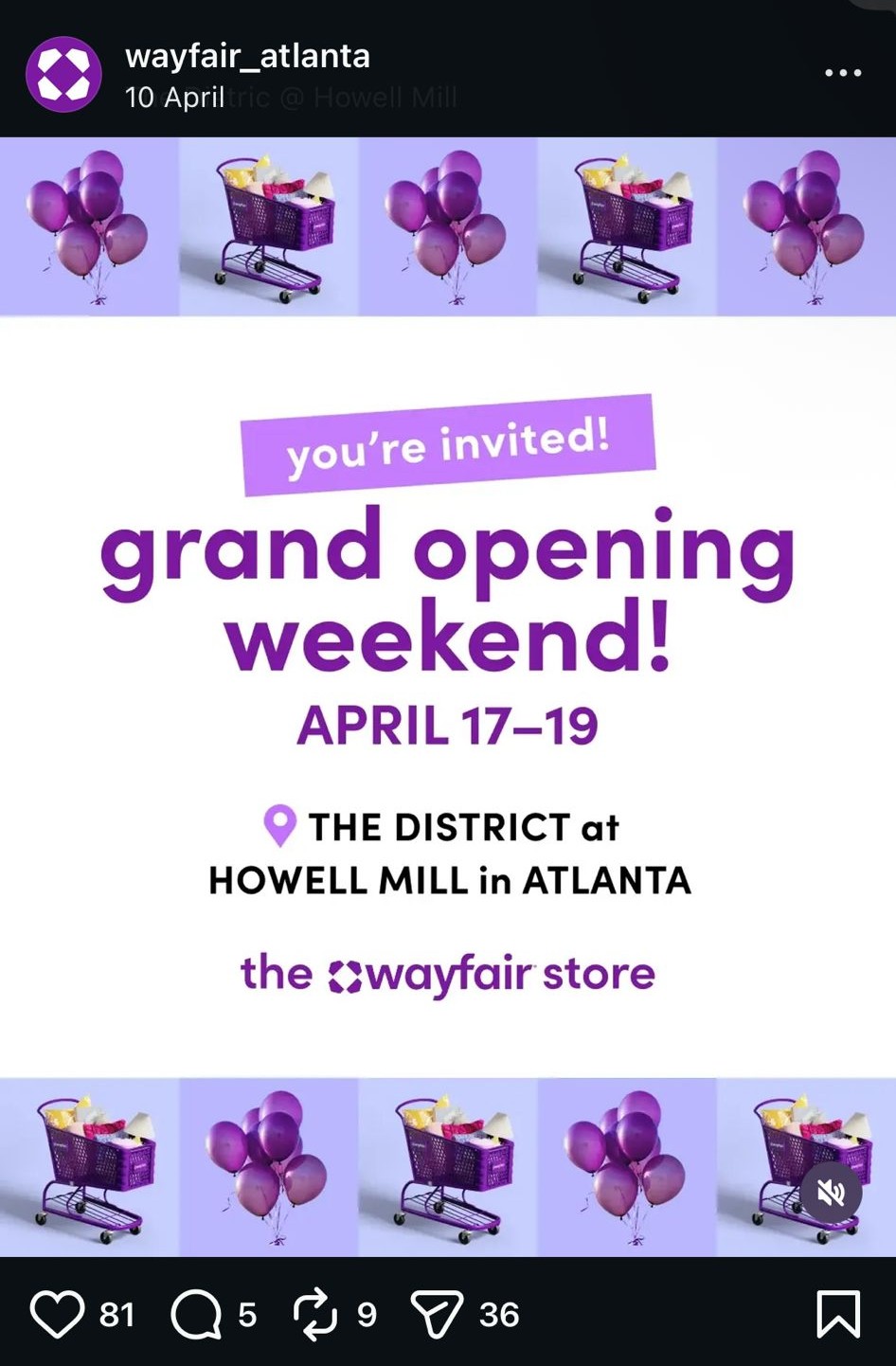
Acadia inverted the playbook. Instead of pointing national media at a local store, the team went all-local - saturating Atlanta’s physical and digital geography until the store felt unavoidable. Onboarded the first week of February, Acadia had the full takeover live by the March 31 soft open.
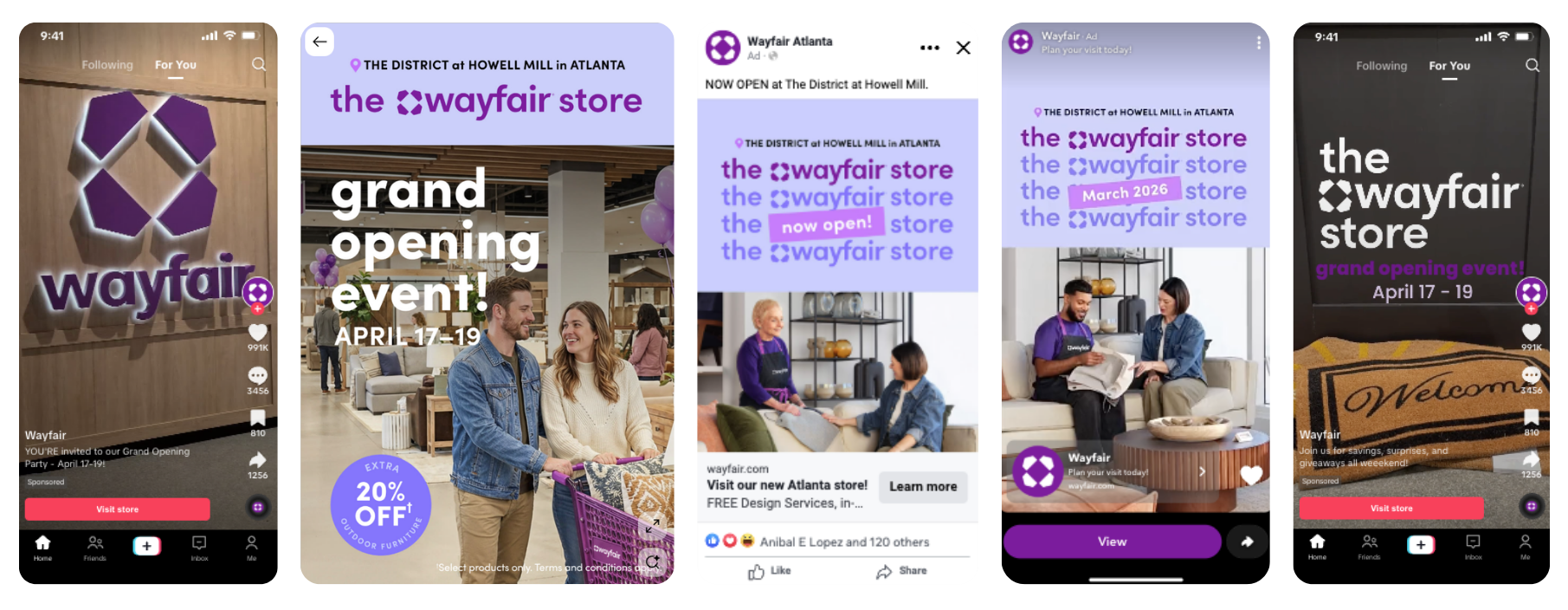
Across Channels, the takeover ran digital out-of-home along commuter routes and conquesting paths to competitors, programmatic display, paid social on Meta, Pinterest, Snapchat (including the newer Snapchat Places), TikTok, Connected TV (CTV), and YouTube, paid search, and Performance Max Local - plus Waze and Google Maps demand-gen to prove a physical store existed.
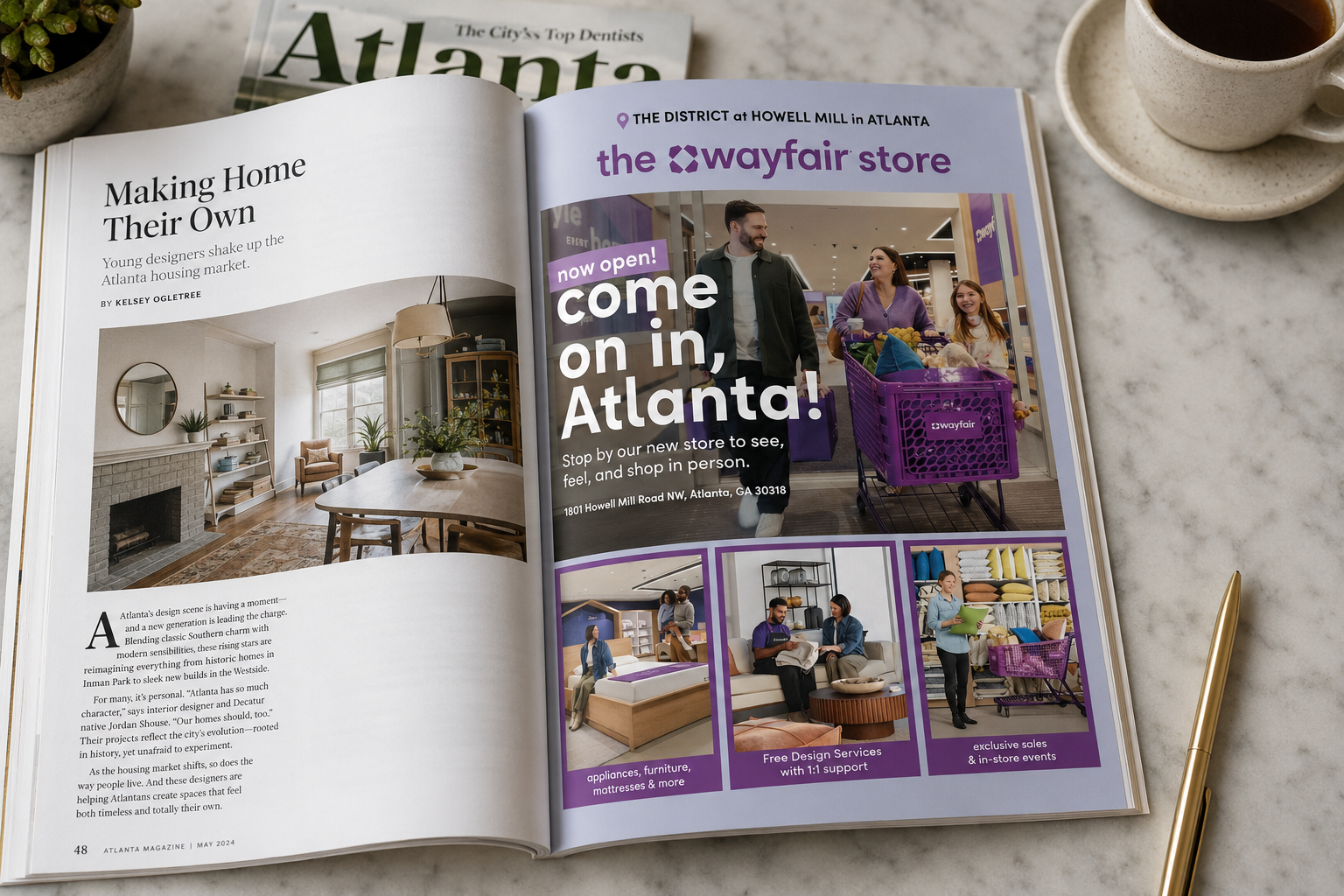
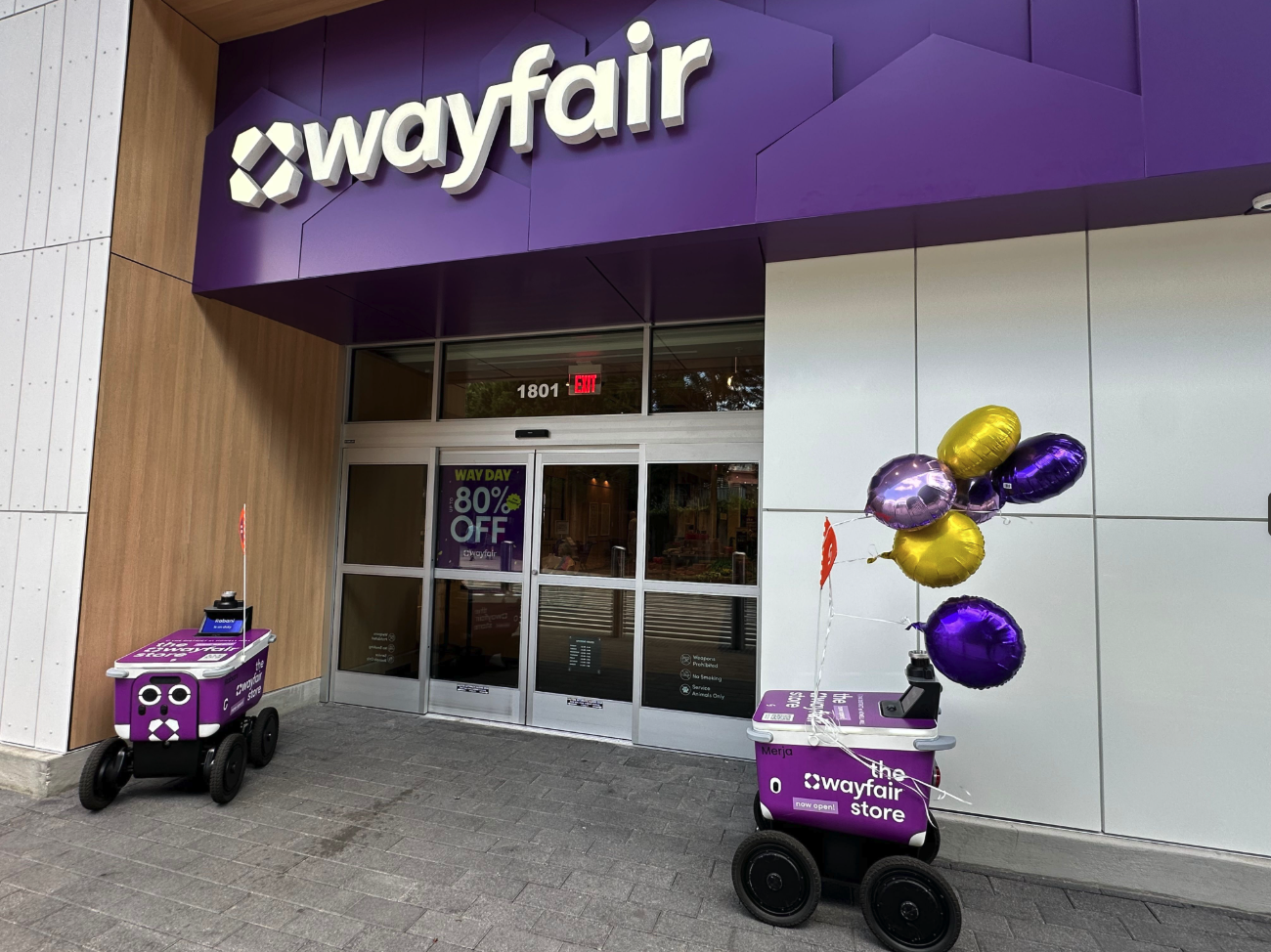
On the ground: broadcast TV and radio with on-site remotes, a sponsorship of midday show Atlanta & Co. (Acadia redesigned its set and test kitchen), an Atlanta Magazine partnership, and food-delivery robots roaming the metro.
A broad national awareness strategy made sense on paper, but it missed the local reality. People an hour away don’t care about a store they can’t reach. Acadia spent against the handful of zip codes that mattered and targeted the commuters already driving to IKEA, turning a competitor’s destination traffic into Wayfair’s.

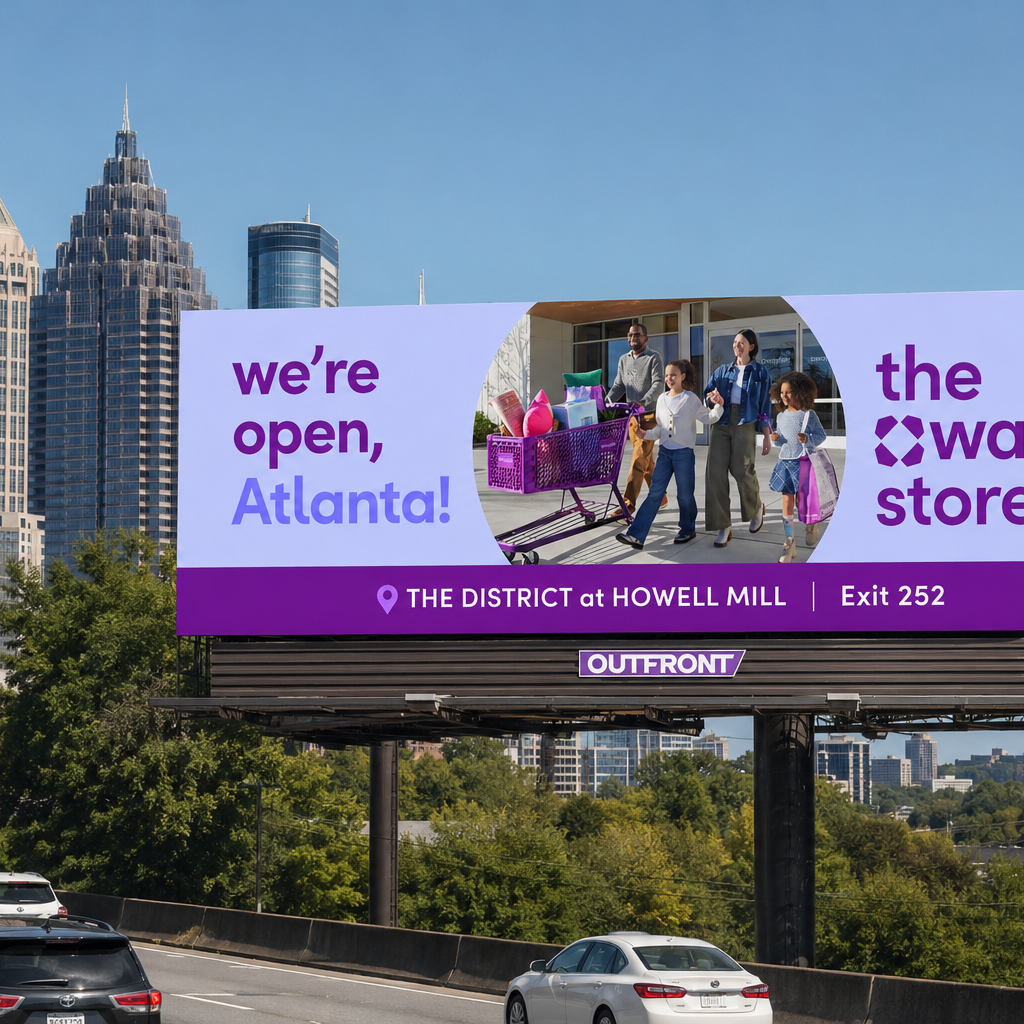
The insight was to localize every surface a single market touches (physical and digital) in the brand’s own color, until a national e-commerce name reads as the neighborhood’s store.
Awareness was never the problem; locality was.
By owning the commuter corridor instead of the country, Acadia converted the fame Wayfair already had into feet through the door.
The localized launch outran the national one. Atlanta’s opening beat Chicago’s - 6,100 guests on day one, the equivalent of two high-traffic Saturdays at the Chicago store. Over the first three days, more than 14,000 guests came through, and momentum held: Way Day drew 6,800 visitors, topping even opening day.
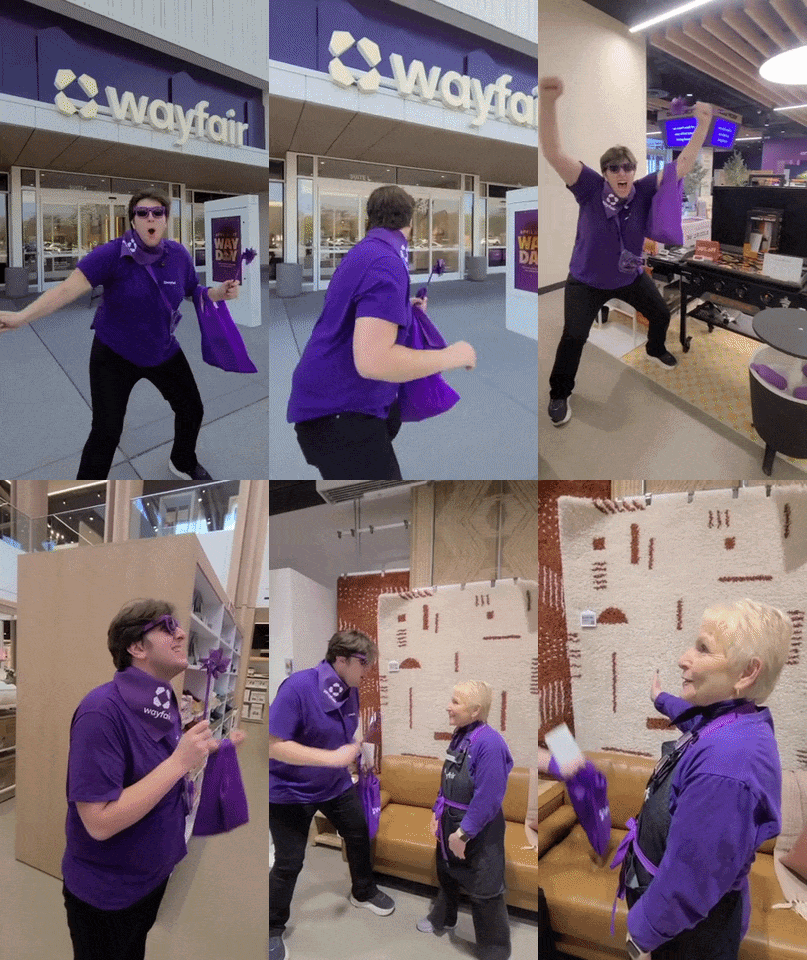


From the March 31 soft open through April 20, traffic ran 45% above forecast, and the campaign beat its sales plan by 4.9% on Way Day. The store also began stealing share - visitation data showed IKEA’s weekday Atlanta traffic dipping as Wayfair captured mid-week locals, exactly the commuters the takeover targeted.
Direct offline sales attribution stayed limited (no offline tracking yet, site not fully tagged), so the win is told in traffic, momentum, and share - not last-click revenue.
STORE TRAFFIC & SALES
- Opening-day guests: 6,100 (≈2x a high-traffic Chicago Saturday)
- First three days: 14,000+ guests
- Way Day visitors: 6,800 (single-day record, above opening day)
- Traffic vs. forecast (3/31–4/20): +45%
- Sales Above Plan on the Year’s Biggest Sale Day: +4.9%
- New Wayfair Rewards enrollments: 121 (opening week)
AUDIENCE & REACH
- People reached via customer-created content: 4M+
COMPETITIVE
- IKEA weekday Atlanta traffic declining as Wayfair captured weekday locals
Ready
to get started?
Turn your diminishing returns into focused growth and holistic marketing strategies.