July 2025 will be remembered as the month SEO and social media finally stopped playing in separate sandboxes. Instagram has officially begun allowing search engines like Google to index public content from professional accounts, fundamentally reshaping how brands approach digital visibility on social media.
Here's the thing: This isn't really about Instagram catching up to the game. It's about the inevitable combination of two marketing disciplines that savvy agencies like ours have been preparing for. At Acadia, we've been calling this fusion "SEOcial" for a while now, with a heavy focus on blending SEO and social media marketing services that prioritize short-form video optimization across TikTok, Instagram, YouTube Shorts, and more. But now with Instagram’s shift to full indexation across the platform, we’re optimizing everything from captions to filenames to keep our clients at the forefront.
The Social Media and SEO Shift: What Changed and Why It Matters
Starting July 10, 2025, Instagram will begin allowing search engines to automatically display public photos and videos from professional accounts in search results, but the real story runs much deeper than a simple policy change.
The Technical Reality
Instagram's move represents a fundamental shift in how social platforms approach search visibility. Professional accounts will be able to activate an option to allow (or prevent) search engines from indexing their public content, but this isn't entirely new territory. Google has been indexing Instagram content for years, including reels, posts, profiles, and public videos. The change seems to be in the conscious control given to the user.
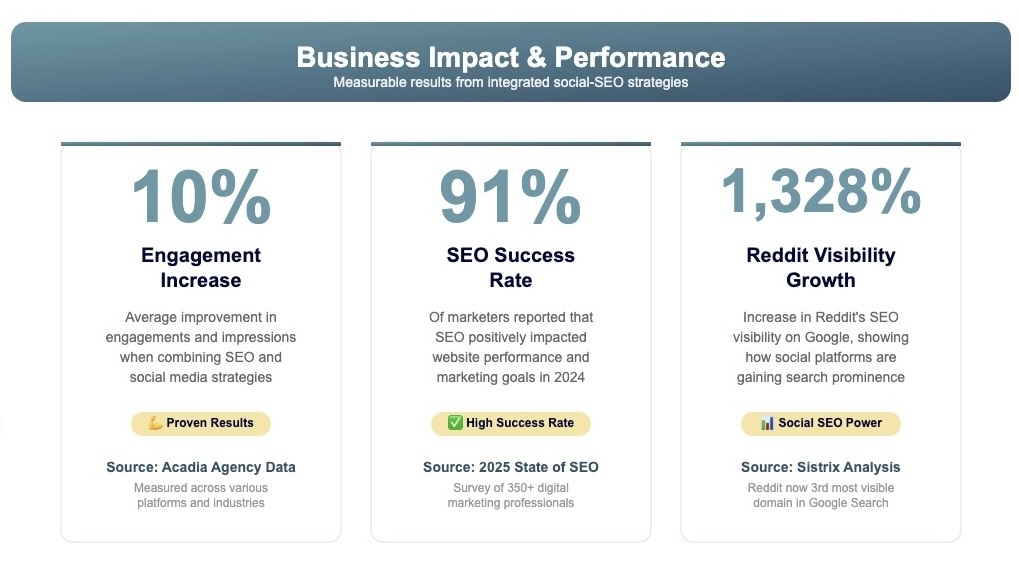
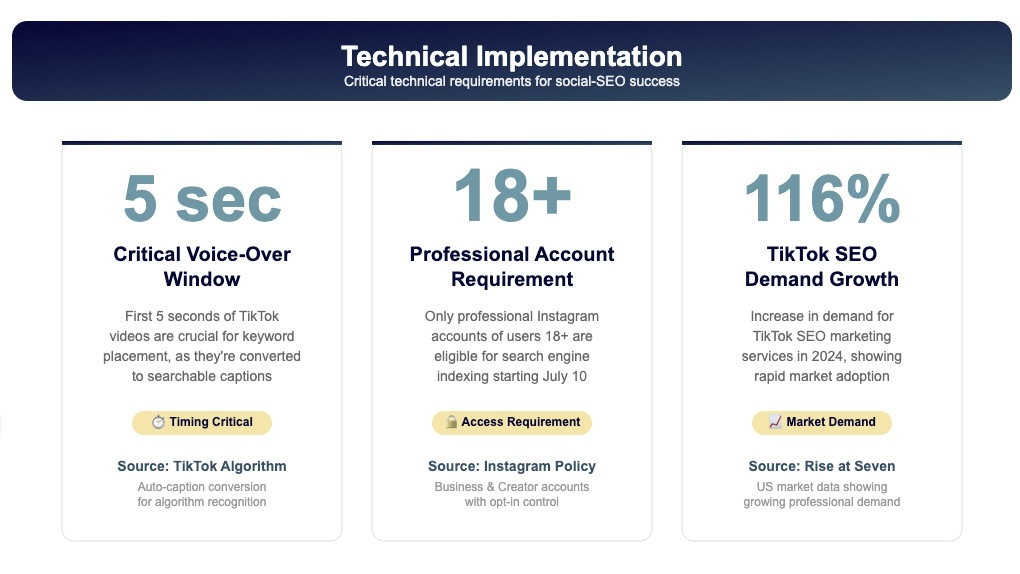
What's new is the explicit opt-in mechanism for professional accounts aged 18 and over. This covers Instagram posts, Reels, carousels, and videos, but notably excludes Stories, which remain ephemeral by design.
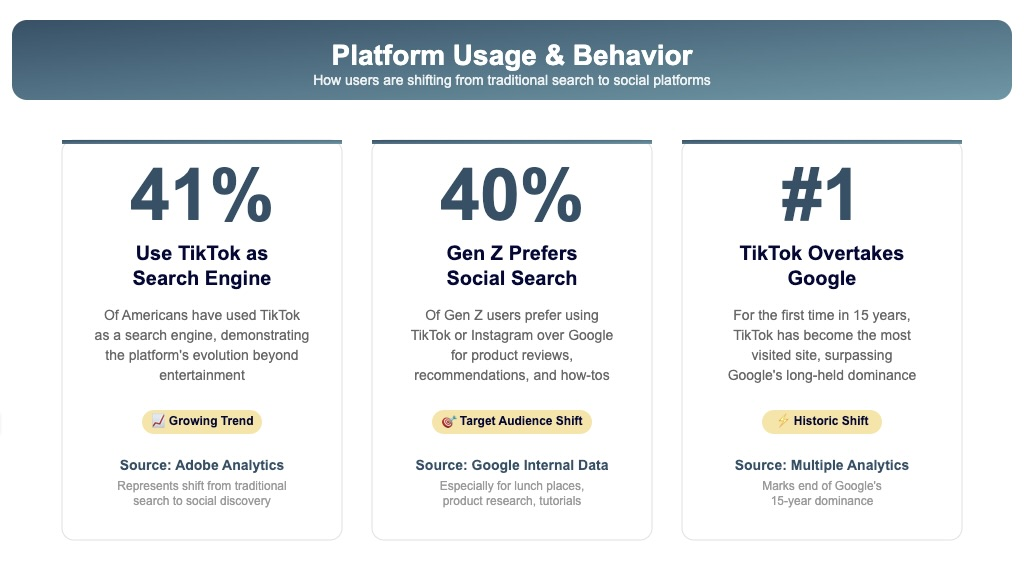
This puts Instagram in direct conversation with TikTok's already-established search dominance. According to Adobe, 41% of Americans said they have used TikTok as a search engine, and for the first time in 15 years, Google is no longer the most visited site; it's now TikTok. Instagram's indexing move isn't a pioneering movement, but more of a platform playing catch-up in a race that TikTok has been winning for a while now.
Strategic Implications
The implications extend far beyond technical specifications. We're witnessing the end of social media as "walled gardens" and the birth of an integrated content ecosystem where search isn't a platform. This behavior is stretching across AI, social, and SERPs.
This convergence demands a fundamental shift from platform-specific content strategies to larger omnichannel approaches. Customer journeys now span multiple touchpoints across search and social platforms, requiring brands to think systematically about how they want to own content discovery, engagement, and conversion across all channels.
Platform Playbook for Instagram vs. TikTok SEO and Social Strategies
Understanding how to optimize for both platforms is crucial for brands looking to capitalize on this new integrated landscape.
Instagram Content Optimization Elements
Caption integration represents the most immediate opportunity. Unlike traditional SEO where keyword density matters, Instagram rewards natural language that incorporates relevant search terms without sacrificing engagement. Alt text, previously used primarily for accessibility, now serves dual purposes, making content accessible while providing search engines with contextual information about visual content.
Profile optimization has become critical real estate. Your Instagram bio should include target keywords that align with how your audience searches, both within Instagram and on Google. The evolution of hashtag strategy now balances discovery within Instagram's ecosystem with broader SEO value.
Content format considerations reveal interesting strategic opportunities. Early indicators suggest carousels may outperform single posts for complex topics, as they provide more content for search engines to index while maintaining high engagement rates typical of Instagram's visual format.
Content Strategy Shifts
The indexing change is driving a notable increase in educational and informational content. From what we can conclude so far, brands and creators will now push more informational content to Instagram. "How-to" content and tutorials are becoming priority content types, as they serve both Instagram's engagement-focused algorithm and search engine discovery needs.
Brand-specific keyword combinations present unique opportunities. For instance, searches like "Ideal Image before and after" can now surface Instagram content directly in Google results, creating new pathways for branded discovery through photos and videos for those looking for a more visual search experience.
TikTok's Established Social Media and SEO Elements
TikTok has been refining its SEO and social approach for years, creating proven best practices that brands can implement immediately. Voice-over optimization has emerged as a critical ranking factor. Choose a certain keyword or variation and say it within the first few seconds of your video because the app automatically converts anything you say into closed captions, which the algorithm reads, ensuring it sees the keyword.
On-screen text optimization works in tandem with a voice-over strategy. Subtitles, text overlays, and clear on-screen messaging ensure your content is accessible and optimizable by search engines.
Completion rates have become the holy grail of TikTok SEO. TikTok has also specifically highlighted the importance of this metric: "A strong indicator of interest, such as whether a user finishes watching a longer video from beginning to end, would receive greater weight."
Strategic Advantages
TikTok's head start in social search provides clear competitive advantages. Over 40% of Gen Z users said they prefer using TikTok or Instagram for searching instead of Google, especially for product reviews, recommendations, and how-tos. This behavioral shift represents a change in how younger demographics discover information and make purchasing decisions that were once solely siloed to web searches.
Unified Short-Form Video Strategy
The key to success lies in creating content that works across both platforms while respecting each platform's unique characteristics. This requires cross-platform content adaptation that maintains brand consistency while optimizing for platform-specific ranking factors.
Metrics tracking across both ecosystems becomes essential for understanding true content performance. A video might perform moderately on TikTok but drive significant Google search traffic, or vice versa. Success for a unified SEO and social media strategy requires looking at performance holistically rather than in specific sections.
SEO and Social Media Framework for Modern Brands
Create Once, Optimize Everywhere
The integration of SEO and social demands a sophisticated strategic approach that treats content as an interconnected ecosystem. The most efficient approach involves developing content hub strategies with platform-specific adaptations. Rather than creating entirely different content for each platform, successful brands should develop core content themes that can be adapted and optimized for different environments while maintaining consistent messaging and brand identity.
Keyword research must expand beyond traditional SEO tools to include social search terms. Keywords that performed well in web searches may also be effective on social media, but social platforms often have unique search behaviors that require dedicated research.
Performance tracking across all touchpoints provides the data necessary for optimization. Social media analytics tools and SEO tools like Google Analytics can track the performance of shared content. Insights on engagement, traffic sources, and conversion rates can help marketing teams adjust their SEO and social media strategies for better results.
B2C Implementation Framework
Phase 1: Foundation Setting
Begin by auditing current social content for SEO potential. Most B2C brands already have valuable visual content on social platforms that could perform well in search results with strategic optimizations. This audit should identify high-performing social content that can be enhanced for search visibility.
Keyword research expansion should include social search terms that align with how consumers actually search. B2C customers increasingly use social platforms for product discovery, reviews, and "how-to" content, particularly on Instagram and TikTok for visual inspiration and quick demonstrations.
Profile optimization across all platforms creates consistent brand signals that search engines can recognize and index. This includes consistent business information, brand messaging, and strategic keyword inclusion that matches how customers search for your products or services.
Content calendar integration ensures that product showcases, customer testimonials, and educational content work together across social media and search to reinforce key brand messages and capture customers at different stages of their buying journey.
Phase 2: SEO and Social Media Content Integration
User-generated content optimization creates authentic, searchable content that resonates with audiences. Customer photos, reviews, and testimonials can be optimized for discovery while maintaining authenticity. This content performs well because it provides real social proof while including natural language that matches how customers search.
Local SEO integration with social proofing becomes particularly powerful for B2C brands with physical locations. Social media content featuring local events, customer visits, and community engagement can improve local search visibility while building community connections.
Before-and-after content and transformation stories work exceptionally well for service-based B2C businesses. These naturally include keywords customers search for while providing engaging visual content that performs well on social platforms.
Product demonstration and tutorial content serve dual purposes. They engage social media audiences while answering common search queries. This content type bridges the gap between social engagement and total search discovery.
Phase 3: Amplification & Optimization
Cross-platform content promotion ensures maximum visibility for high-value content. A customer transformation might become an Instagram post, a TikTok before/after video, a Google Business Profile photo, and a website testimonial, all optimized for different discovery channels.
Community building around brand topics creates engaged audiences that amplify content reach through shares, comments, and user-generated content. Customer communities naturally create the authentic engagement signals that both social algorithms and search engines value.
Seasonal content planning across platforms ensures consistent messaging during high-traffic periods while capitalizing on seasonal search trends. Holiday promotions, seasonal services, and trending topics can be leveraged across both social and search channels for targeted reach and engagement.
B2B SEO and Social Media Application Principles
B2B brands in SaaS, fintech, and other industries can adapt these SEOcial strategies by focusing on professional platforms and longer-form educational content. LinkedIn becomes particularly important for B2B social-SEO integration, as it allows for more detailed content that can rank well for professional search queries.
Industry insight content and thought leadership pieces work well for B2B brands looking to establish authority across both social and search channels. Behind-the-scenes content that showcases expertise and company culture can build trust while remaining discoverable.
Customer success stories and case studies optimized for social engagement and search serve dual purposes: They provide social proof for engagement while including keywords and topics that potential B2B customers search for while they are on their B2B buyer journey.
Future-Proofing Your SEO and Social Strategy: What's Next
The combination of social and search is just beginning, with several emerging trends that forward-thinking brands should monitor. AI search integration continues to evolve rapidly. Dedicated AI search platforms like Perplexity and ChatGPT search have gained significant traction. They offer conversational search experiences that combine web results with AI-generated summaries and analysis. Social content increasingly appears in these AI-powered search results, making optimization for AI discovery increasingly important.
Voice search optimization for social content also represents a growing opportunity. As voice search becomes more sophisticated, content that includes natural language patterns and conversational keywords will have advantages across both social and search channels.
Predictive Strategic Adjustments
An increased focus on conversational content aligns with social media engagement patterns and AI search capabilities. Content that answers questions in natural language performs well across multiple discovery channels. Multimodal content creation, such as combining text, video, and audio elements, provides multiple entry points for discovery while serving different user preferences and search behaviors. Community-first content strategies recognize that engaged communities amplify content reach and create authentic signals that search engines value.
Early adoption of Instagram indexing optimization provides first-mover advantages in search results. Brands that optimize quickly can establish authority in search results before competitors adapt their strategies. Social listening for SEO keyword discovery reveals real-time insights into how audiences discuss topics, providing keyword opportunities that traditional research might miss. It allows you to get a bird's-eye view of your industry and what is driving user behavior.
Case Study Application: Red Roof’s SEOcial Success
Practical Implementation
In Q1 2025, months before Instagram's official indexing announcement, Acadia partnered with Red Roof to test the impact of SEO and social optimization on short-form video performance. We conducted a controlled experiment across Instagram Reels, TikToks, and YouTube Shorts, optimizing captions, hashtags, video titles, and filenames for relevant keywords. The standout campaign, "Redi to Roadtrip," focused on UGC content that pushed localized discovery across all three platforms, perfectly positioning Red Roof for travelers of all kinds searching for budget-friendly accommodations along popular routes.
Measurable Results
The results validated our SEOcial approach with impressive cross-platform improvements. On Instagram, optimized Reels (6 posts) delivered a 26.1% increase in engagements per post compared to regular content (18 posts), moving from 33.71 to 42.5 engagements while also achieving 5.3% higher impressions. TikTok showed even more dramatic results, with optimized content (6 posts) generating 14.3% more impressions per post than regular posts (17 posts) and maintaining steady engagement growth. Most significantly, SEO-optimized content's share of total engagement grew from 14.9% in January to 26.4% by March, demonstrating increasing relevance and audience connection from our optimization strategy.
Strategic Insights and Continued Learning
Our March performance data revealed a crucial insight about SEO and social media effectiveness during broader social media challenges. While Red Roof's overall social media saw 1,965 fewer impressions and 2,378 fewer engagements month-over-month, SEO-optimized content gained 2,266 impressions in the same period. This inverse relationship proves that strategic optimization can drive meaningful results even when general organic social performance declines. YouTube Shorts presented different challenges, with optimized content underperforming compared to the brand's established full-length videos, highlighting the importance of building content libraries before optimization efforts can compete with existing high-performing content. Our team knew that our SEO and social media marketing services could be meshed in order to drive new avenues of engagement, and this case study was a testament to that.
SEO and Social Media Integration is the New Imperative
The convergence of social media and organic search creates unprecedented opportunities for brands willing to broaden their digital strategies. Success requires treating content as an ecosystem rather than platform-specific assets, and early data from our client initiatives suggests that combining SEO and social media strategies leads to an average of 10% increase in engagements and impressions across various platforms.
At Acadia, we've been developing integrated SEO and social media marketing services that bridge this gap, helping clients achieve measurable improvements in cross-platform engagement. We didn't just stumble onto the term "SEOcial”; we created it because we saw this crossover coming and wanted to help our clients prepare for a world where search and social operate together.
For brands seeking to capitalize on this shift, integrated social-SEO strategies require specialized niches in both domains. The technical requirements, content strategies, and performance measurement approaches differ significantly from traditional single-channel approaches. Our agency has a deep understanding and expertise in this sector of digital optimization, and we’d love to hear from your brand about the challenges you face and how we can help boost your cross-platform performance.
Contact Acadia for a comprehensive social-SEO integration audit that identifies opportunities across all your digital channels. The evolution is happening now, and the question is whether your brand will lead it or follow it.
Read more from this author: