
In 2025, even brands generating millions in revenue on Amazon are struggling more than ever to stay profitable.
Why? Because supply chain and logistics are no longer just backend functions, they’re the profit levers.
With new fees, stricter inventory requirements, and evolving fulfillment options like Amazon Warehousing and Distribution (AWD) and Amazon Global Logistics (AGL), the brands that thrive are the ones that treat logistics as a core strategy, not an afterthought.
If your operations aren’t airtight, your margins will leak fast.
In today’s article, Tamara Vukovic, Account Operations Manager at Acadia, and Armin Alispahic, Retail Media Team Lead at Acadia, break down the crucial steps to making your Amazon supply chain run as efficiently as possible.
Let’s dive in.
Choosing the Right Products: Logistics Comes First
Before you fall in love with a product idea, run the logistics math.
The three most critical factors from a supply chain perspective are still size, weight, and durability, but Amazon's evolving fee structure has made each one even more important.
- Size and weight directly affect fulfillment fees and storage costs, where durability and packaging impact return rates and damage allowances, especially for vendors.
- Packaging design now plays a strategic role. Getting into the right size tier or qualifying for SIPP (Ships in Product Packaging) can cut fulfillment costs.
As of February 5, 2024, Amazon rolled out a major overhaul to its size tier and fee structure.
- Standard-size items are now measured in two-ounce intervals.
- Large standard-size is broken into four-ounce brackets (1–20 lbs).
*These changes didn’t apply to Apparel products. - The former oversize classifications (small, medium, large, and special) have been streamlined into just two: large, bulky, and extra-large, each with updated dimensional and weight thresholds.
These changes open up new cost-saving opportunities for sellers who can redesign packaging to shift products into lower tiers. Even minor adjustments, such as trimming an inch or reducing a few ounces, can now yield significant fee reductions.
Example:
A product measuring 16" on its longest side gets classified as large standard-size (if weighing up to 16 oz), but if you can shave it down to 15" or less, it qualifies as small standard-size, with lower fees (if the median and shortest side are 12" and up to 0.75", respectively).
That single inch could mean a $0.90 savings per unit. If you sell 100 units per day, that’s nearly $32K saved annually, just by redesigning the packaging.
💡 Pro Tip:
Qualifying for the SIPP program not only improves delivery experience but can also cut fees by up to $1.32 per unit. So smart packaging design isn't just cost-effective, it’s strategic.
What Is DIM and Why Does It Matter?
Understanding dimensional (DIM) weight pricing is essential for sellers looking to protect their margins on Amazon. DIM weight quietly drives up fulfillment, removal, and multi-channel fulfillment (MCF) costs, especially for large but lightweight products.
DIM weight is a pricing method Amazon uses to account for the space a package occupies in transit, not just its actual weight. Amazon calculates billable weight based on the greater of actual weight or dimensional weight:
DIM Weight Formula: (Length × Width × Height in inches) / 139
Note: Storage fees are still based on cubic footage, not DIM. But for almost every other fee type tied to movement, DIM weight can be the cost driver.
Failing to account for DIM weight during product development or packaging design can crush your profitability, especially if your item is lightweight but voluminous. Just a few extra inches of packaging could push a product into a higher billing tier, eating into already-thin margins.
💡 Pro Tip: Audit your top ASINs regularly to check if reengineering the packaging (flattening, folding, or reducing void fill) can drop you below key dimensional thresholds.
Example 1: Let’s say you sell an item that weighs 2 lbs but ships in a box that measures 18" × 14" × 8" with actual weight: 2 lbs.
DIM weight: (18 × 14 × 8) / 139 = 14.503 lbs => $10.68 fulfillment fees / item
Your fulfillment and removal fees will be based on DIM 14.503 lbs, not 2 lbs, unless you redesign the packaging. You could save up to $5 per item on fulfillment fees only. If you sell 100 units per day, that’s nearly $180K saved annually!
Example 2:
Here’s another example where you can save $0.53 per unit or $530 per 1000 units sold.
$5.52 vs $4.99

Beyond size and weight, several product-level decisions can make or break your logistics costs:
- Use scannable barcodes at the source: Products with manufacturer-applied, Amazon-accepted barcodes reduce the need for relabeling, speeding up Fulfillment Center (FC) processing and eliminating prep fees. For categories that require Amazon barcodes (Fulfillment Network Stock Keeping Unit/FNSKU-like topicals or consumables), build this into your production workflow, especially if you're Amazon-exclusive or can segment production lines by sales channel.
- Case-pack whenever possible: Products that are pre-packed by case at the source are significantly easier to ship, receive, and process. Case-packed units reduce the complexity of shipment builds and minimize touchpoints that can trigger errors, delays, or chargebacks.
- Register your GTINs: For vendors, ensuring that your cases are tied to Global Trade Item Numbers (GTINs) registered in Amazon’s GTIN Library (also called the GTIN Gold List) can be a massive time and cost-saver. When GTINs are recognized in the system, labeling requirements are reduced or removed entirely, especially valuable for high-volume Purchase Order (PO) shipments.
💡 Pro Tip: If you're already using GTINs but still seeing labeling requirements, request an update through Amazon’s GTIN Library Team to register your identifiers properly.
Preparing Products for Amazon: Get It Right Before You Ship
Amazon’s prep requirements vary by category and product type. Sending in a product that isn’t properly prepped (and labeled) doesn’t just cause delays; it can trigger labeling fees, non-compliance charges, or even full-on chargebacks (especially for vendors).
The ideal Amazon product requires zero additional prep at the FC.
That means:
- No labeling needed
- Packaging that meets Fulfillment by Amazon (FBA) standards
- Proper protective materials already in place
But for many products, especially liquids, topicals, breakables, or multipacks, you’ll still need to follow specific FBA prep protocols (e.g., polybags, bubble wrap, or taping).
Also, for categories that require FNSKU labels, like topicals or consumables, you need to make sure that items have the label applied over the UPC/MNF barcode.

Note:
- If your products are fragile or made of glass, you must pre-package them, even if you’ve opted for Amazon’s prep service. This is to ensure that they can withstand transit to Amazon fulfillment centers and be safely handled by Amazon FBA Prep Service associates. Products that are classified as sharp must arrive fully packaged, as Amazon will not prep these items.
- If you do not want to perform product prep or label yourself, Amazon can perform this for you for a per-unit fee. To have Amazon prep or label your products, you must first enable the FBA Prep Service and FBA Label Service in your FBA settings.

💡 Pro Tip for Vendors: Improper prep = chargeback per unit. If you're shipping high-volume POs, even a minor misstep can add up fast.
Check out the Amazon Pre-Launch Checklist
Shipping to Amazon
FOR 3P SELLERS (SELLER CENTRAL)
Shipping to Amazon as a third-party seller is flexible, but it’s gotten more expensive and nuanced in the last ~year.
- Shipments are created inside Seller Central, and Amazon may split them across multiple FCs.
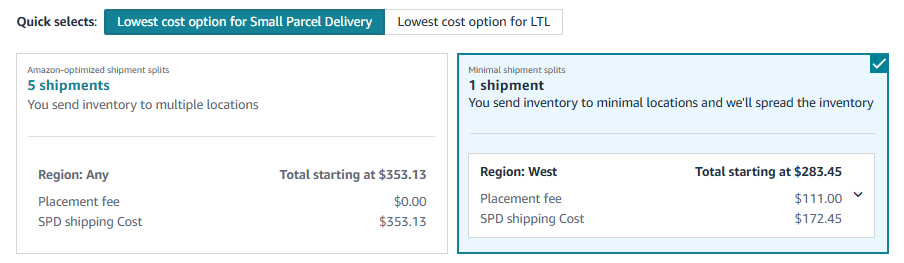
- To avoid this, sellers can use the Inventory Placement Service, but it now incurs an Inbound Placement Service Fee of $0.27 (standard-size) or $1.58 (large/bulky) per unit.
When you create a shipping plan, you can select one of the following inventory inbound placement options:
-
- Minimal shipment splits: Send your inventory to the minimal number of inbound locations, generally to a single location, for a fee, and Amazon decides how to place the inventory across the network.
- Amazon-optimized shipment splits: Send your inventory to multiple inbound locations yourself for no fee. To qualify, shipments must include at least five identical cartons or pallets per item. Each carton or pallet must contain the same quantity per item and the same item mix.
- Partial shipment splits: Send your large, bulky-sized inventory to multiple inbound locations (but fewer than with the Amazon-optimized option) for a reduced fee. *This option is not available for shipping plans for standard-sized products created on or after February 20, 2025.
- The inbound placement fees may vary by inbound location. For example, there may be higher fees for shipments sent to locations in the West compared to other parts of the country.
- Prep after shipment creation: Only box and label once you know the FC split.
- Use Amazon-partnered carriers or your own preferred option. Discounted rates often apply with Amazon’s network.
- Ensure box labels and box content information are accurate. Mislabeling can delay check-in or get your inventory sent back.
- Monitor the Inbound performance dash to identify any inbound defects.

FOR 1P VENDORS (VENDOR CENTRAL)
Vendor shipments are more rigid, and the margin for error is thinner than ever. Shipments are PO-based, with release windows usually starting on Mondays.
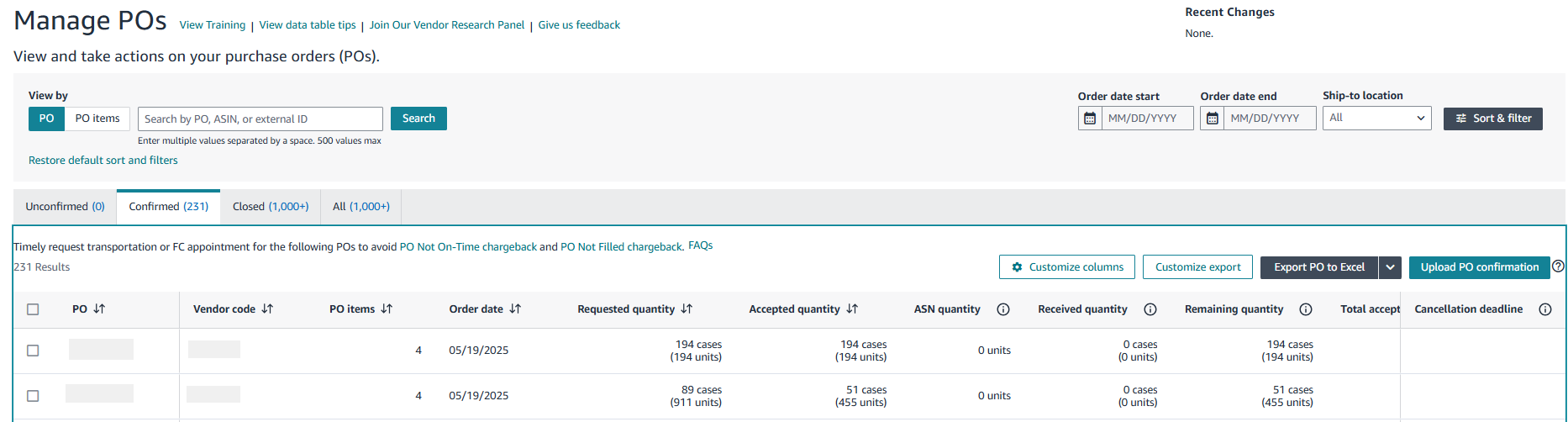
- Vendors must ship within Amazon’s assigned window, and late/missed routing requests almost always trigger chargebacks.
- You can choose between Collect (Amazon arranges pickup) or Prepaid (you manage shipping), but Collect typically comes with a 3% fee deducted from Cost of Goods Sold (COGS).
- Advance Shipping Notifications (ASNs) are mandatory, and errors will get flagged quickly through the Chargeback Dashboard.
- A misstep in ASN submission or routing can result in deductions that directly impact your margins. Regular dashboard audits are essential.

Forecasting and Replenishment: Balancing Control and Constraints
FOR 3P SELLERS (SELLER CENTRAL)
As a third-party seller, you have more flexibility than vendors, but also more complexity to manage.
- 3P sellers can use Amazon’s internal forecasting tools to gain inventory replenishment insights, but these aren’t always accurate.
- Amazon provides restock and demand forecasts, but they remain imperfect. Your best bet? Blend those signals with 30-day velocity, also taking into account any holidays or marketing efforts you’ll be making that may impact demand (deals, social media campaigns, email blasts, etc.)
- One of the biggest struggles with Seller accounts can be inventory quantity limits that prevent sellers from sending the amount they feel provides adequate coverage. The best solution to mitigate this is to have your own fulfillment as a Plan B while Amazon learns more about the demand for your products and increases inventory caps. Another solution is to replenish inventory as often as possible in the early stages of the product launch, and wait for Amazon’s system to increase the inventory limit over time.

- In April 2024, Amazon introduced a Low Inventory Level Fee for standard-sized products. The fee is added to the FBA fulfillment fee when a product’s inventory is consistently low relative to sales. This applies only when both:
-
- 30-day historical days of supply < 28 days, and
- 90-day historical days of supply < 28 days.
- To stay ahead of these fees, make sure you:
- Set a 45-60 day supply target to buffer against fluctuations and receiving delays.
- Analyze both short-term (30d) and long-term (90d) supply metrics regularly.
- Adjust for seasonal demand spikes ahead of time.
- Plan shipment timing to avoid dips below the 28-day threshold.

💡 Pro Tip:
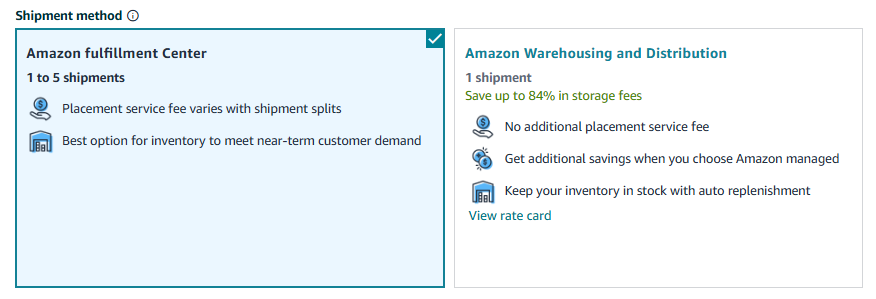
Consider utilizing AWD to pre-stock at low-cost Amazon facilities and auto-replenish FBA, especially if you’re struggling with capacity limits, as there are none at AWD.
How does it work?
- Participating sellers send their inventory, in bulk, to one of Amazon’s distribution centers.
- Sellers can then manage their inventory storage operations with the Amazon Fulfillment Network.
- Unlike FBA, there are no capacity limits for AWD.
- Your stock is automatically repositioned and relocated to whichever storage facilities are the most effective.
- This optimizes both the delivery times and fees, at no extra charge.
- The replenishments take up to an average of 14 days to move from an AWD center to the FBA network.
- Consider Amazon AWD if you have any of these problems in particular:
- Shipment delays and excessive delivery times.
- Frequent stock outages and unreliable forecasting.
- Storage capacity limits at your current inventory facilities.
- A complicated web of supply chain partners that are difficult to consolidate.
- Varying storage costs that make it difficult to predict fees.
- Struggling with profitability.
- Challenge: There is less control with automated FBA replenishment. We recommend caution here and testing small scale first. The program is still new, so there will probably be unexpected issues with it.
- Tracking and reconciliation of shipments is tricky, as there is no clear process in place. We have faced multiple pushbacks from Amazon, but we managed to reconcile missing units.

- Consider Fulfillment by Merchant (FBM) as backup fulfillment for launches or when FBA restock limits are tight.
- Replenish more frequently in early launch phases to “teach” Amazon demand patterns and raise your restock limits.
- Analyze both short-term (30d) and long-term (90d) supply metrics regularly.
FOR 1P VENDORS (VENDOR CENTRAL)
For vendor accounts, POs from Amazon can often be inconsistent, and it’s a challenge for many vendors to forecast properly:
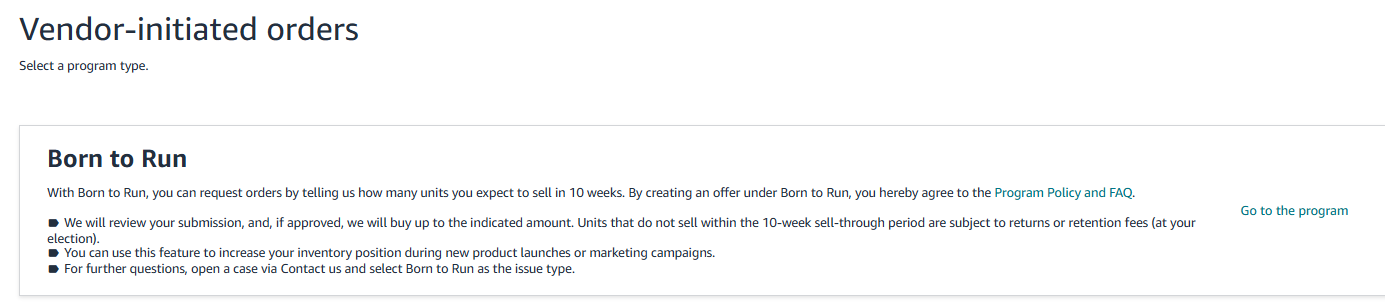
- The Born to Run program is one of the tools most vendors have at their disposal, and it enables them to issue POs on their own. However, if products are not sold within 10 weeks, the following applies:
- Amazon will keep unsold units. Vendors will provide Amazon a retention fee equal to 20% fee on the total unsold COGS and then an additional 30% fee on any COGS unsold below the 50% sell-through threshold. If vendors choose this option, any retention fee will be automatically deducted from accounts payable under an automatically generated agreement in Amazon’s CoOp system.
- Amazon may return unsold units based on weeks of cover and sell-through. For returned units, vendors will refund the product cost and 10% of shipping and handling fees.
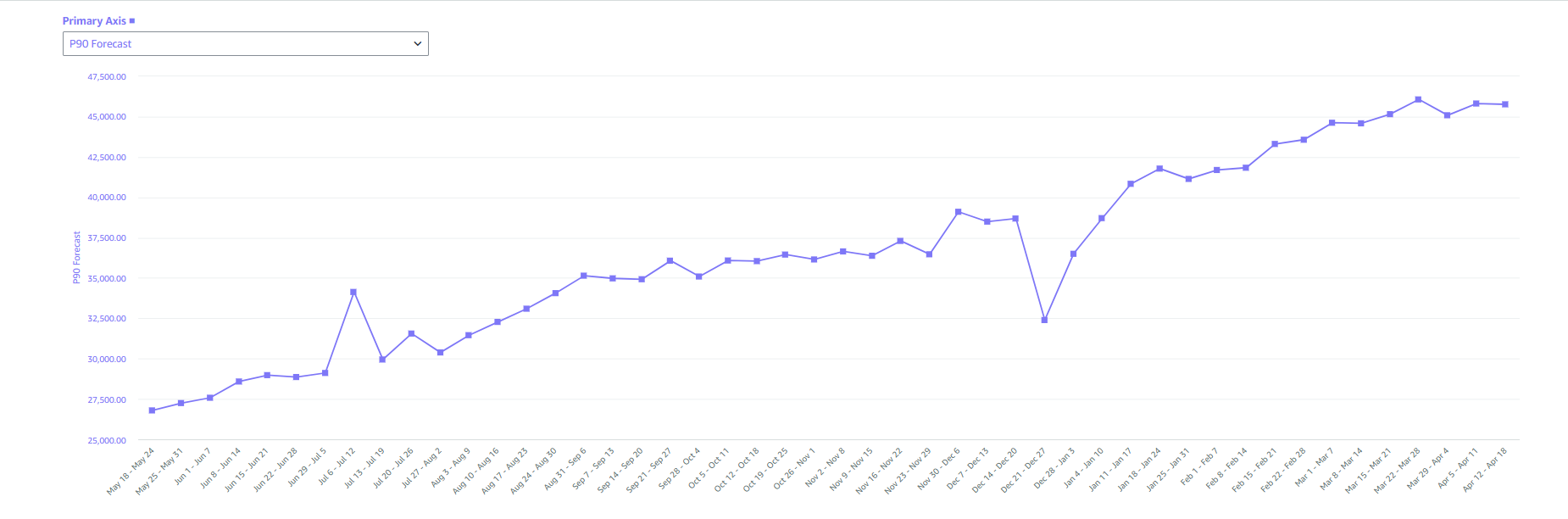
- Looking at forecast reports in Analytics can help vendors have a rough idea of what to expect in their next POs. However, the forecast Amazon provides is often inaccurate.

- Ideally, Amazon’s purchase orders should align with its P90 forecast.
Managing Returns and Refunds: Data or Damage?
FOR 3P SELLERS
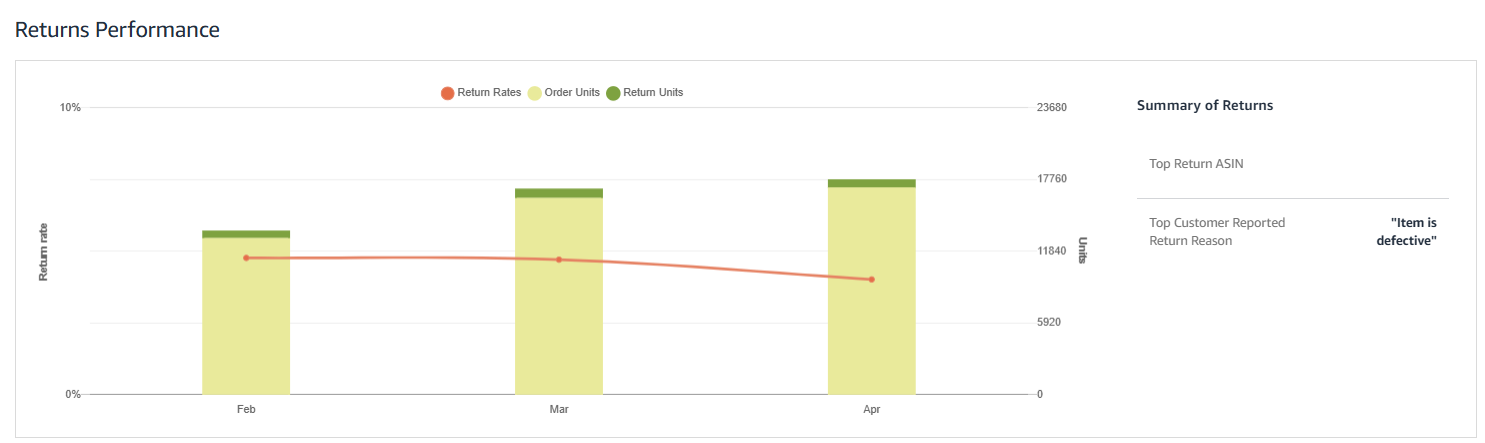
Returns are more manageable in 3P models thanks to full access to refund data and customer feedback.
- This data can be analyzed, and if root causes are found, sellers can work on fixing the issues or minimizing the impact on their Amazon business
- 3P sellers can also interact with Amazon customers through the messaging portal and gain valuable insights this way - this is your goldmine for product feedback and quality flags.
- Use the Returns Report and FBA Returns dashboard to identify product or listing issues.
- Perform quarterly review analysis to identify existing issues.
- Request reimbursements when Amazon errors occur.
FOR 1P VENDORS
Returns visibility is limited unless you’re contracted for reverse logistics. Amazon typically assigns a Damage Allowance (DA) of 2-5% of shipped COGS, but can negotiate higher if returns rise.
- Vendors should request return-level data prior to accepting any DA increases.
- Consider post-return resale channels (e.g., Grade & Resell or Amazon Outlet) to reduce write-offs.
Disputing Fees & Protecting Profitability
PROFIT TACTICS FOR 3P SELLERS
Yet another advantage of 3P over 1P: Sellers control their selling prices, and simply bumping up the price can improve channel profitability.
Sellers should also audit the fulfillment fees and returns and ask for reimbursements from Amazon if specific orders have incorrect fees or when specific returns were not refunded as per Amazon’s Seller policy.
Having almost full control over inventory in Seller Central is also advantageous because sellers can optimize the levels of inventory they have at FBA, thus controlling the storage-associated fees.
- You control pricing. Raising the price to offset rising fulfillment fees is a fair game.
- Audit fulfillment fees, returns, and reimbursement reports regularly. Amazon makes mistakes.
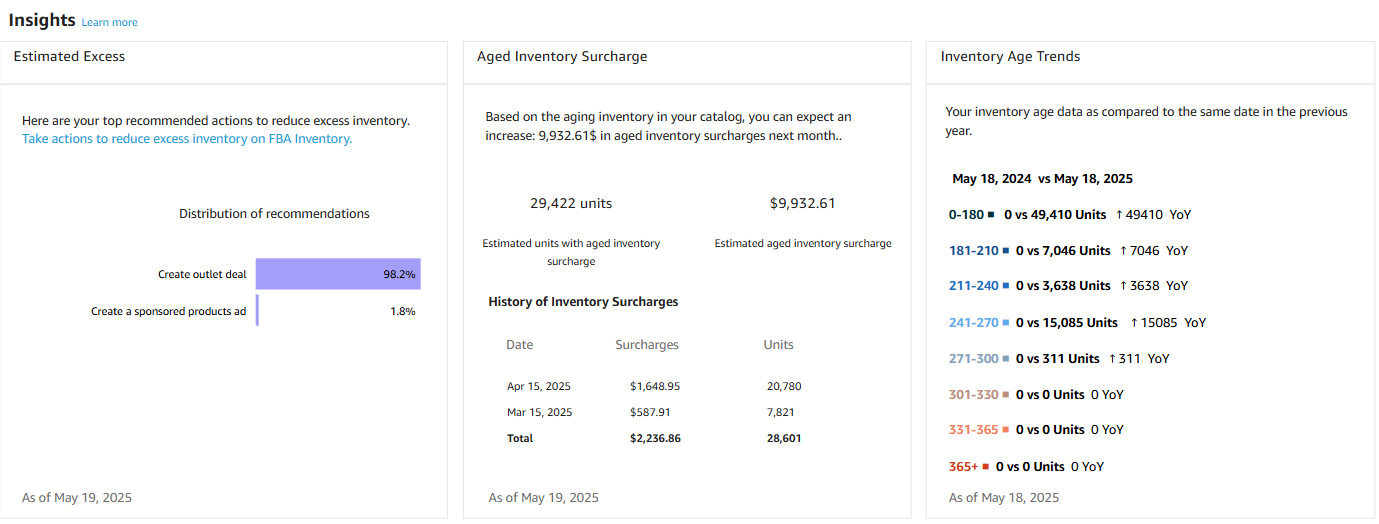
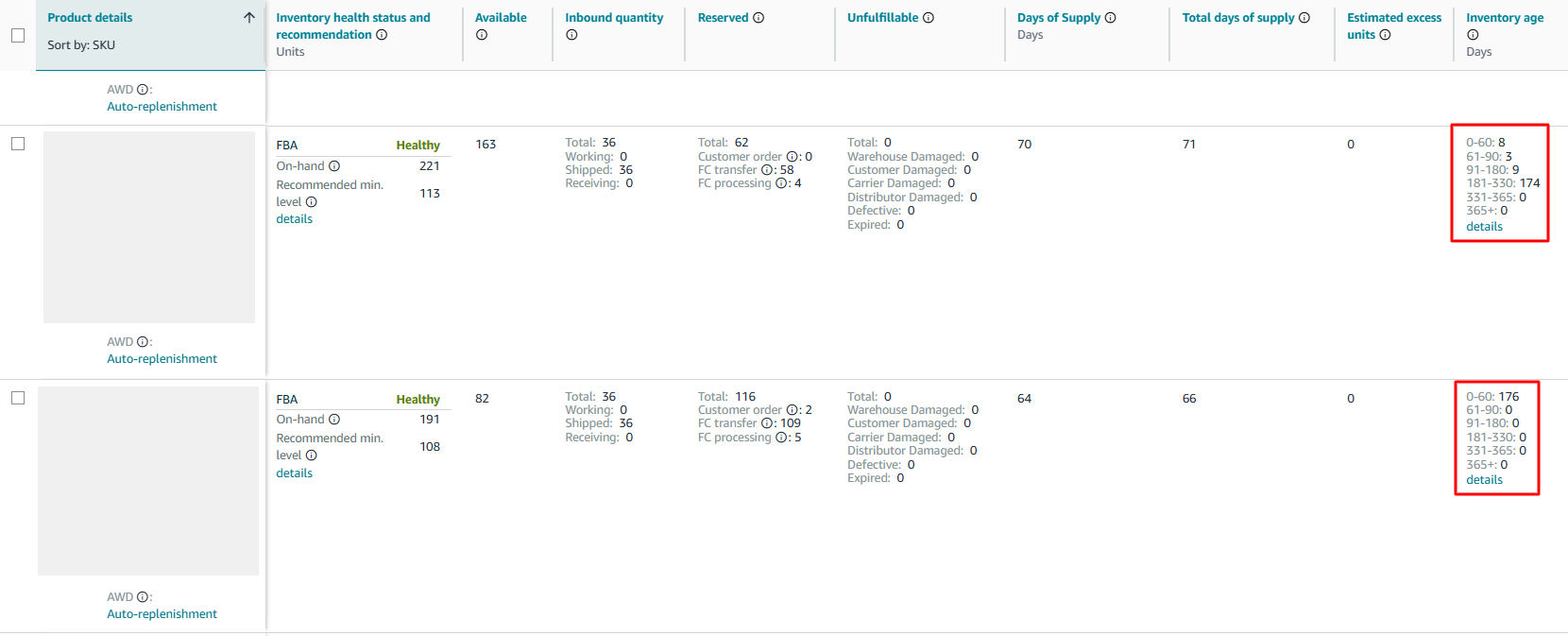
- Keep your inventory age under control to avoid long-term storage fees.
- Consider utilizing AWD + AGL. You can improve cash flow and lower costs by reducing direct FBA replenishment frequency.

💡 Pro Tip:
Check the relatively new dashboard Inventory Defect and Reimbursement (IDR) Portal. This is a centralized tool that consolidates inventory-related defects across Amazon’s fulfillment network, including:
- Warehouse lost
- Warehouse damaged
- Customer returns, etc.
It replaces the need to manually track defects across multiple reports and aligns with Amazon’s FBA reimbursement policy, enabling faster diagnosis of systemic issues in warehousing, shipping, or returns.

MARGIN WATCH FOR 1P VENDORS
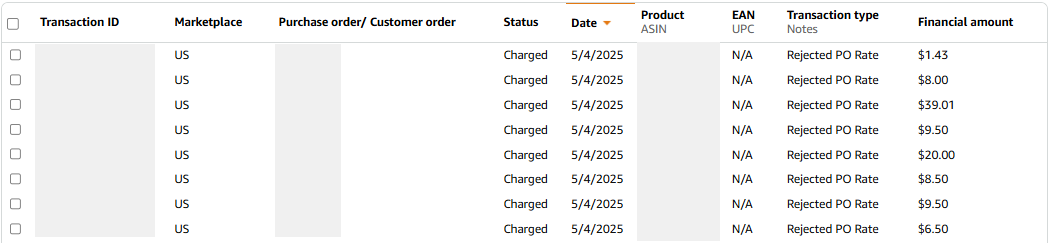
Remaining profitable on Amazon is an ongoing battle for Vendors due to ever-increasing fees and the fact that each mistake is penalized in the form of a chargeback.
The most important thing for vendors to focus on is operational excellence, so there are no additional costs of doing business with Amazon.
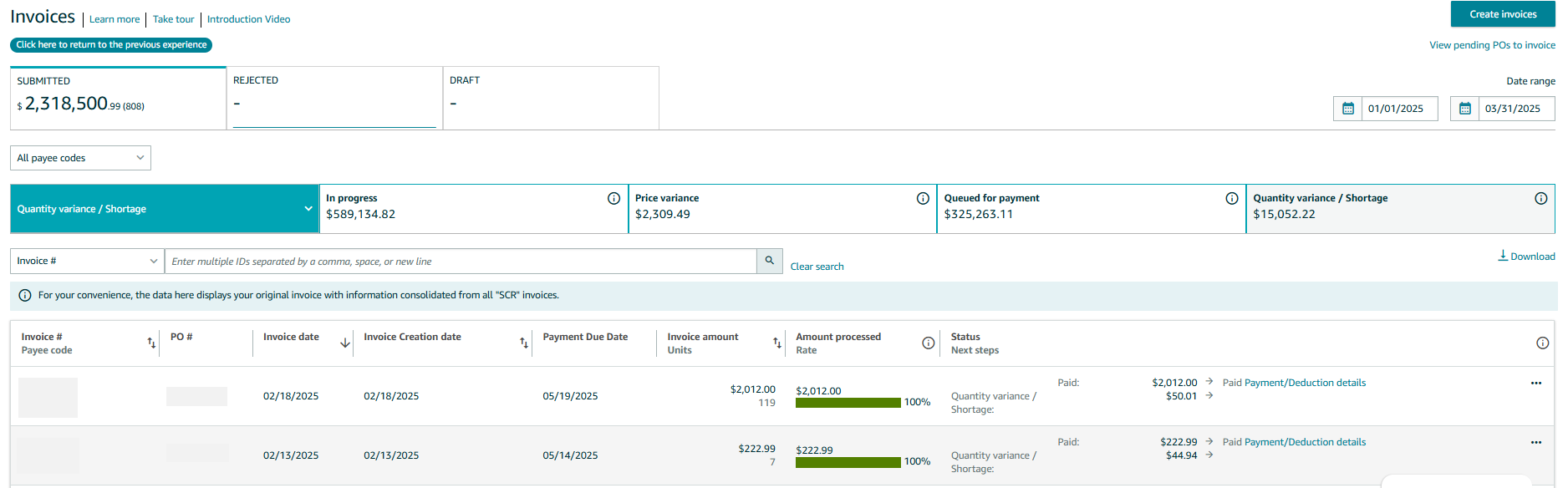
The following dashboards within Vendor Central should be reviewed regularly, and if there are discrepancies, they should be thoroughly investigated.
- Operational Performance
- Chargebacks
- Invoices
- Shortages
- Dispute Management
- Keep detailed documentation (e.g., ASN confirmations, BOLs, packing slips). Disputes need proof, and there’s often a short resolution window.


The Bottom Line
From optimizing packaging and navigating DIM weight fees to leveraging tools like AWD and proactively managing replenishment, success on Amazon demands a detailed, data-driven approach. By treating logistics as a front-end priority rather than a back-end function, brands can protect their margins, reduce costly inefficiencies, and build a foundation for long-term growth.
The bottom line? Operational excellence isn’t optional; it’s a competitive advantage.
Here are some key recommendations from the Acadia team:
- Claim missed reimbursements and recover what Amazon owes you. Review the IDR portal regularly.
- Identify ASINs at risk of aged inventory fees and reduce aged and excess Inventory by running promotions or discounts to move stock before the 15th of the month.
- Negotiate for better terms to boost cash flow and to lower per-unit cost.
- Audit inventory processes and seek any weak points to improve operational efficiency.
- Audit FBA fees and optimize product size & packaging (ideally before product launch), and reconfigure cartons for better shipping efficiency.
- Enroll eligible ASINs in the SIPP program for up to $1.32 savings/unit.
- Conduct a monthly profitability review to identify high-cost ASINs or operational inefficiencies.
- Compare the cost of using AWD vs. inbound placement fees.
- Optimize your shipping to align with the Five Box Rule for greater carton efficiency.
Get in Touch
Need help with Supply Chain and Logistics for Amazon? We are always here to help. Book a free consultation with one of our experts today and find out how our team can support you.
Read more from this author: