
 Gary Hammerschlag is a Team Lead of Account Strategy - Retail Marketplaces.
Matt Rosenfeld is President - CRUSH, an Acadia Company.
This is Part 2 of a two-part series on organic strategy in the AI era.
In Part 1, we explored how Amazon’s incentives, AI-driven discovery, and tools like Rufus are reshaping the foundations of organic performance, without changing the core rules of the game.
In this installment, we turn to execution. We’ll break down the metrics that actually matter in an AI-powered marketplace, explain why reputation has become such an important long-term lever, and show how content, conversion, and customer reality combine to create a self-reinforcing organic flywheel.
The Metrics That Actually Matter
In the AI era, the three metrics that should be driving your organic strategy decisions are click-through rate, conversion rate, and impression share, and together, they form a simple but powerful equation.
 Click-through rate × conversion rate × impression share = revenue. Advertising only controls one of those three variables. The other two are entirely within your control through content and creative decisions.
Click-Through Rate: Winning the First Look
Click-through rate is the first test: does your listing earn the click when it appears in search results? The primary levers are your main image, your title, your price and promotions, and your social proof signals like star ratings and review volume.
Here's what fully optimized CTR looks like in practice:
- Flaus, an electric flosser priced at a premium $118.98, uses every available inch of real estate to justify the click: a Shark Tank badge, 45 floss heads included, a limited-time deal badge, and 3,000+ units sold in the past month.
- MALK almond milk takes a different but equally deliberate approach: clean organic branding, a strong 4.7-star rating, and a running promotion.
- Flint's Mints goes further, answering the most common customer questions (vegan? sugar-free? non-GMO?) directly in the main image thumbnail.

One critical and underappreciated constraint: on mobile, you get only 80 characters of your title. If there is something genuinely important to making a shopper feel confident clicking, it must be in those first 80 characters, or you've already lost most of your audience.
Conversion Rate: Winning the Decision
Once a shopper lands on your page, conversion rate is the number one factor influencing organic rank. Amazon rewards products that convert because a conversion is proof that the match was right. The levers here are broader: carousel images, pricing, promotions, Q&A, reviews, and listing content as a whole.
- MALK Almond Milk demonstrates what this looks like in practice. The first carousel image leads with a bold brand promise: "less is more delicious", and immediately establishes the core value proposition: simple, organic ingredients, no gums, no fillers.
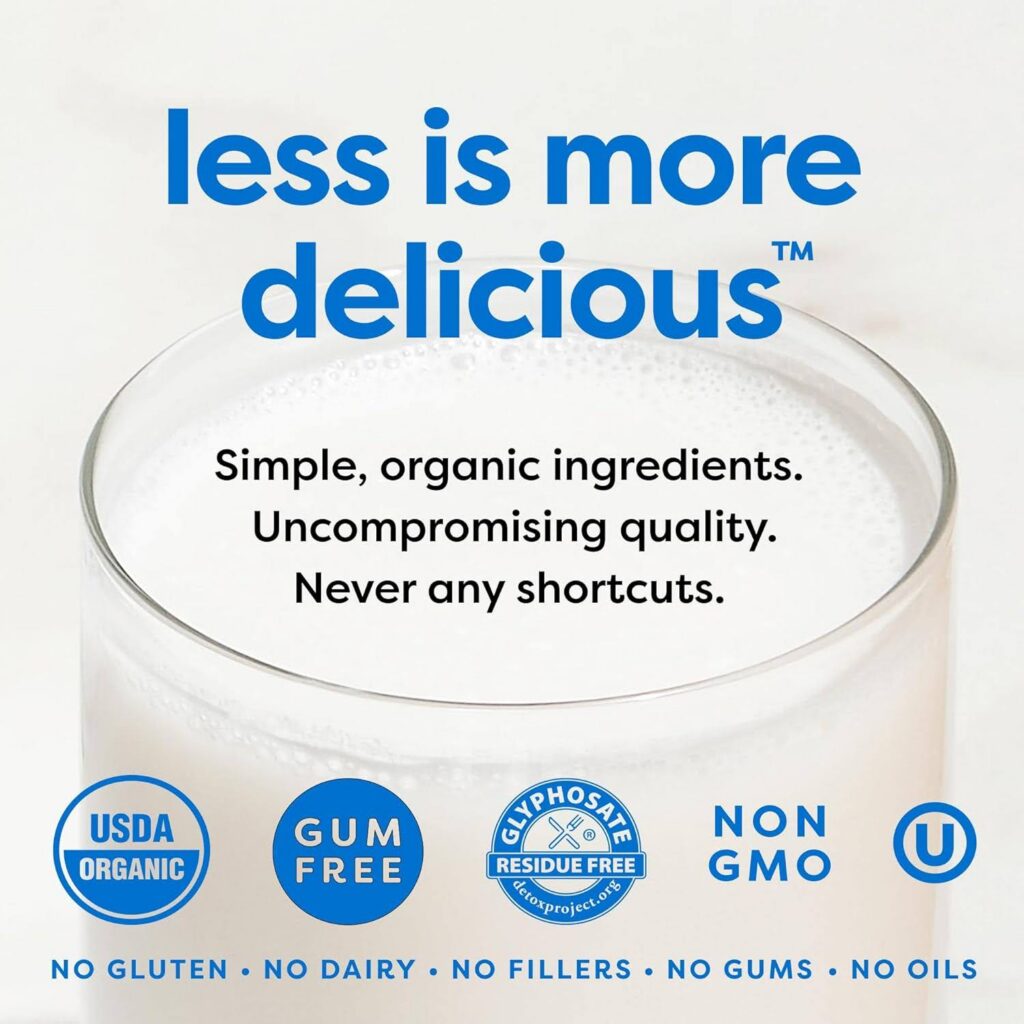
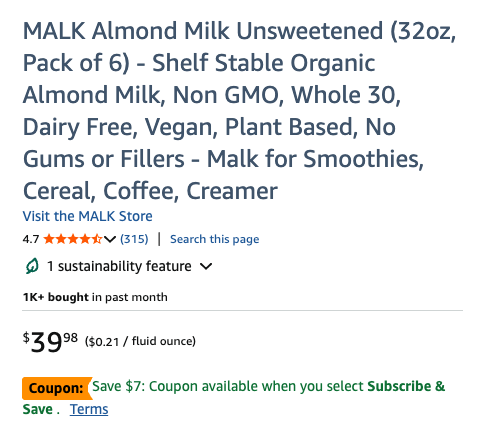

The second image is entirely devoted to social proof: certifications arranged cleanly with the message. The title restates the same key questions shoppers want answered: Is it GMO? Is it Whole30? Is it dairy-free? Vegan? The goal is that after viewing a single image, a shopper should feel fully confident to buy.
One critical note: bullet points universally fail to populate on mobile. If your key selling points live only in bullets, they may simply not exist for the majority of your shoppers. Every important message needs to live in your imagery.
Impression Share: Winning the Right Audiences
Impression share is the metric most influenced by advertising, but it must be built on a strong foundation of click-throughs and conversions. The goal isn't category-level share of voice. It's laser-focused relevance on the specific keywords where your product can genuinely win.
By tracking weekly changes in CTR, conversion rate, and impression share on your most relevant keywords through Brand Analytics, you can see the direct impact of listing changes in near real time.
Make a change to your main image or title, and within a week, you'll see whether it moved the needle on your priority keywords.
The broader principle: these three metrics are the largest drivers of improvement in organic rank because they demonstrate to Amazon's algorithm that your product is the right product to show for a given search. When you align your incentives with Amazon's by proving relevance and conversion quality, the flywheel starts.
Reputation Is Everything
Here's where it all comes together and where the most important lesson of the AI era lives.
Amazon's algorithm is learning from two sources simultaneously: what you tell it (your listing content, your keywords, your creative), and what your customers tell it (reviews, Q&A responses, return rates, satisfaction signals).
These two streams of information need to be in alignment. When they're not, the algorithm notices.
When Content and Reality Align
Example: Consider a hair care brand whose review data and Rufus-generated customer summaries consistently highlighted the same themes: "soft," "shiny," "effective," "lightweight."
The brand took those exact phrases, directly pulled from customer language, and wove them into the listing creative. The result is a product page where a lifestyle image sits alongside a real customer quote: "It literally changed my hair. It's so soft, less damaged, more shiny, and just all over better than it's ever been."
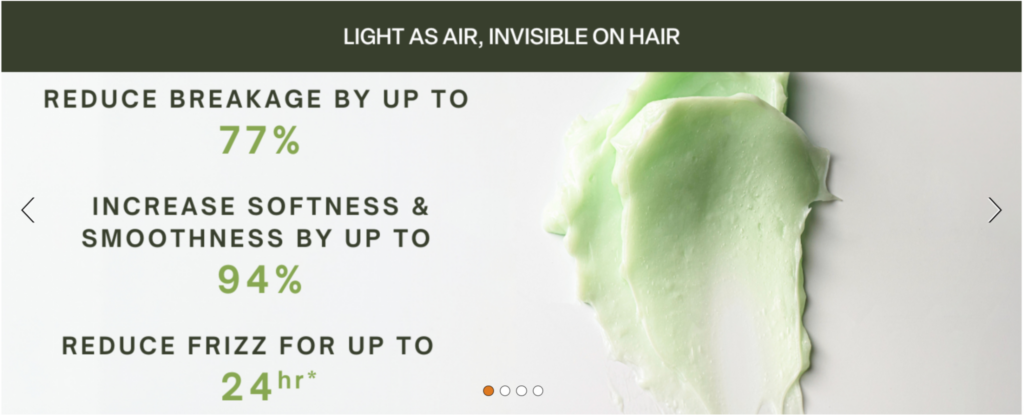

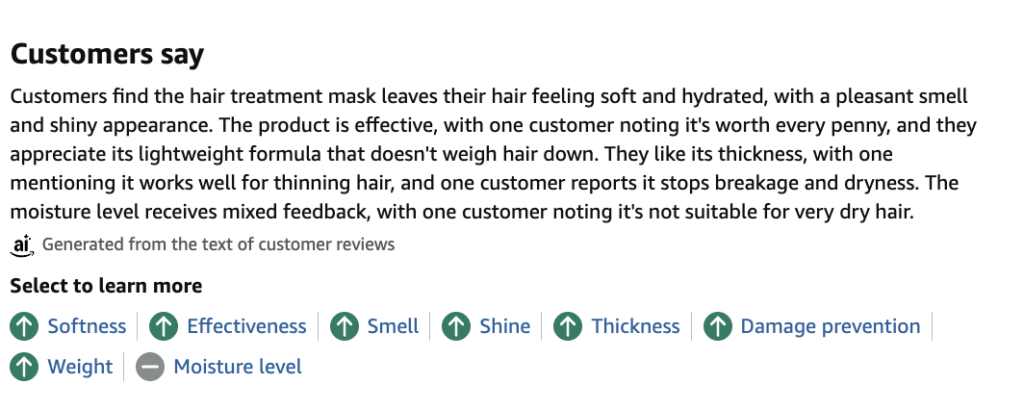

The Rufus "Customers say" summary for the same product mirrors the content almost perfectly. That alignment is not a coincidence. It's the result of a deliberate strategy to ensure that the listing content and the customer experience tell the same story.
When Content and Reality Diverge
Now consider a different scenario. A high-protein bar brand that grew quickly and virally. Category research shows customers frequently search for "delicious protein bars," so the logical move would be to lead with taste in the listing. But the number one piece of consumer feedback in their reviews is that these particular bars don't taste good.
If the listing promised "delicious taste" and the reviews delivered a different verdict, the brand would be telling Amazon one thing while customers told Amazon another. With a broken signal, the algorithm's confidence erodes.
The smarter path was to lead with what the product actually delivered: an extraordinary nutritional profile, a specific calorie count, a specific protein count, and let taste be secondary. Content aligns with reality. The reputation loop stays intact.
This is the new discipline of reputation management on Amazon. It's not just about responding to reviews. It's about ensuring that the story your listing tells is the same story your customers are living.
Optimizing PDPs for an AI-Powered Platform
The practical application of all of this starts with a rigorous, ongoing approach to scoring and improving your product detail pages.
The starting point is a structured audit across multiple dimensions: content quality, UGC integration, SEO alignment, mobile readiness, and Rufus optimization. Each dimension gets a score. Where the scores are weakest, that's where investment delivers the highest return.
The process works best when it starts with a test-and-learn mindset.
- Use AI tools to mine review summaries and competitor Q&A for insights.
- Build benefit-led content and imagery that reflects what customers are actually saying.
- Validate the impact through conversion rate and click-through improvements on specific keywords.
- Then scale what works across the broader portfolio.
The key nuance is that the weighting of different factors is not static. Today, Rufus-optimized content might carry a certain percentage of overall listing performance.
In three months, as Amazon continues its evolution toward a fully personalized shopping experience, that weight will shift.
So don’t optimize once and move on. Build the muscle to adapt fluidly as the platform evolves.
Being as fluid in your approach as Amazon is in its daily operation is the discipline that separates brands that scale from brands that stagnate.
Conclusion: Good Amazon Optimization Is Good AI Optimization
The organic wild isn't fully tamed. It may never be. The landscape is growing bigger and more complex by the day, and it still has more of the frontier in it than the orderly city.
But that's not a reason to pull back. It's a reason to lean in, test more, learn faster, and stay curious. As the saying goes, you either win or you grow.
The brands that treat this moment as a threat will fall behind. The brands that treat it as an opportunity, whether working independently or with a retail media and ecommerce marketing agency, to build a more intelligent, more human, more resonant presence on the world's largest marketplace will come out ahead.
The fundamentals haven't changed. Keywords still matter. Content still matters. Creative still matters. Conversion still matters. What's changed is the level of sophistication required to do those things well and the degree to which the platform itself is now an active participant in your brand's story.
At the end of the day, the equation is content, reputation, and technology working together. Your content tells the story. Your reputation validates it. And technology, the AI systems that are learning from every signal you give them, amplifies both.
Build that alignment, and the algorithm becomes your partner. That's not the wild west. That's the future.
Let’s Talk!
Understanding how Amazon’s AI-driven ecosystem works is one thing. Actually applying it at scale, across a portfolio, with measurable impact, is another.
This is exactly what our team does. Get in touch to see how we can apply this framework directly to your brand.
Read more from this author: